
The Left Democratic Front's defeat in Kerala marks a historic moment as Left parties are without power in any state for the first time in decades, highlighting their diminishing political influence across India.

'At the first sign of real trouble, that money will move. There will be a run.'

Protests by factory workers in Noida, India, demanding wage increases turned violent, resulting in arson, vandalism, and stone-pelting in Phase-2 and Sector 60 areas. Police have been deployed to control the situation and maintain order.

Employment in urban areas in the first quarter of 2024-25 (FY25) improved over the previous one. The unemployment rate in April-June (Q1) declined to 6.6 per cent from a four-quarter high of 6.7 per cent in January-March FY24 owing to the fall in the male unemployment rate, according to the quarterly Periodic Labour Force Survey (PLFS) data, released by the National Statistical Office (NSO) on Friday.

As the years passed, joblessness in the region increased.

The United States Trade Representative (USTR) office on Wednesday launched a sweeping investigation into manufacturing and industrial practices in 16 economies, including India, citing concerns over what it calls 'structural excess capacity' that could distort global trade. Announcing the move on a White House press call, Jamieson Greer said the probe would be conducted under Section 301 of the Trade Act of 1974, one of Washington, DC's most powerful trade enforcement tools.

Vijay Varma delivers a tour de force performance in Nagraj Popatrao Manjule's Matka King, a compelling eight-part series that chronicles the rise and fall of a gambling trailblazer in 1960s-1970s Bombay, notes Sukanya Verma.

The rate of unemployment in the country, measured in monthly term, rose to 5.6 per cent in May from 5.1 per cent in April this year mainly due to seasonal variation, showed the government data released on Monday.

'If movement remains stalled for three to four months, more than 300,000 recruitments from India could be affected.'

The rise was more pronounced in urban areas than in the rural areas.

Unemployment rate for persons aged 15 years or above declined to 3.1 per cent in 2023, the lowest in the last three years, as per a report of National Sample Survey Organisation under the statistics ministry. According to Periodic Labour Force Survey (PLFS) for calender year 2023, the unemployment rate came down to 3.1 per cent in 2023 from 3.6 per cent in 2022 and 4.2 per cent in 2021. Joblessness, or unemployment rate, is defined as the percentage of unemployed people in the labour force.

As the March 31 deadline arrives, a wave of Maoist surrenders suggests insurgency's end, but political and social concerns remain.

IMF Managing Director Kristalina Georgieva discusses the potential of artificial intelligence to boost global growth, particularly in India, while also addressing the significant risks of job displacement and financial instability.

Tea planters in Darjeeling have raised that a shortage of commercial LPG, triggered by the ongoing conflict in West Asia, could hit tea processing during the first flush, the delicate early-season harvest that commands the highest premiums and often sets the tone for the year.

This election is different. It is no longer simply about governance or welfare. It is about identity, fear, and who belongs. The BJP has successfully shifted the terms of the debate from what the government has delivered to who the real Bengali is and who is an outsider, points out Ramesh Menon.

India's unemployment rate for persons aged 15 years and above was recorded at a six-year low of 3.2 per cent during July 2022-June 2023, as per the Periodic Labour Force Survey Annual Report 2022-2023 released by the National Sample Survey Office. Joblessness or unemployment rate is defined as the percentage of unemployed persons in the labour force. Considering the importance of the availability of labour force data at more frequent time intervals, the NSSO launched the Periodic Labour Force Survey (PLFS) in April 2017.

In 2019, out of the 1,440 minutes in a day, Indian youth spent 148 minutes on employment-related activities, which increased to 158 minutes in 2024.

Aadu 3: Part 1 feels like a film trapped in its own ambition. While it expands the universe in an interesting manner, it loses sight of the tight, irreverent humour that made the previous films click in the first place, notes Sreeju Sudhakaran.

Unemployment rate rose to 13.3 per cent in July-September 2020 as compared to 8.4 per cent in the year-ago period, according to a periodic labour force survey by the National Statistical Office (NSO). Joblessness or unemployment rate (UR) is defined as the percentage of unemployed persons in the labour force. The UR was 20.9 per cent in April-June 2020, the eighth Periodic Labour Force Survey (PLFS) showed.

By all available indications, the White House drafted a face-saving note and handed it, ready-made, to Islamabad. Pakistani Prime Minister Shehbaz Sharif was supposed to then post it in the guise of a plea urging Trump to extend the deadline by two weeks 'to allow diplomacy to run its course'. Trump would then graciously accept Pakistan's 'request' and declare a ceasefire. Sharif dutifully posted the message on X. Except that he, or whoever was handling the account, forgot to delete the tell-tale first line visible in the edit history: 'Draft - Pakistan's PM Message on X'. Prem Panicker's must read blog on the Iran War.
Unemployment rate for persons of age 15 years and above in urban areas dipped to 12.6 per cent in April-June 2021 from 20.8 per cent in the same month of the previous year, showed a periodic labour force survey by the National Statistical Office (NSO). Joblessness or unemployment rate (UR) is defined as the percentage of unemployed persons in the labour force. The joblessness was high in April-June in 2020 mainly due to the impact of lockdown restrictions in the country which were imposed to curb the spread of deadly coronavirus.

'Each generation has gone through the hardships and the fruit of labour can't taste sweeter than this.'
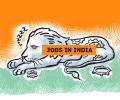
The unemployment rate for persons of 15 years and above in urban areas slipped to 8.7 per cent in October-December 2021 from 10.3 per cent in the year-ago quarter, showed a periodic labour force survey by the National Statistical Office (NSO). Joblessness or unemployment rate (UR) is defined as the percentage of unemployed persons in the labour force. Joblessness was high in October-December in 2020 mainly due to the staggering impact of the lockdown restrictions in the country, which were imposed to curb the spread of the deadly coronavirus.

If he cannot do it this term by using his bureaucracy and experts from different fields, it will be a tragedy, asserts Ramesh Menon.

'The BJP is keeping its options open and that the final decision is still tightly held.' 'That is consistent with the party's tendency to preserve suspense, avoid premature factional conflict, and use leadership selection as a way of resetting internal hierarchies.'
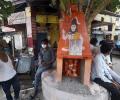
Unemployment rate for all ages in urban areas rose to 9.3 per cent in January-March 2021 from 9.1 per cent in the same month of the previous year, showed a periodic labour force survey by the National Statistical Office (NSO). Joblessness or unemployment rate (UR) is defined as the percentage of unemployed persons in the labour force. The UR for in CWS (current weekly status) in urban areas for persons of age 15 years and above was 10.3 per cent in October-December 2020, the ninth Periodic Labour Force Survey (PLFS) showed.
While the country's unemployment rate is falling, the quality of employment seems to have taken a hit. The pace of formalisation slowed in the five months of the current financial year (April-August) with more than half a million fewer formal jobs created in the period compared to the same period last year, according to data from the Employees' Provident Fund Organisation (EPFO). The payroll data showed that cumulatively 4.92 million new subscribers joined the social security organisation between April-August this year, compared to 5.51 million subscribers in the same period in the previous year, reflecting a 10.7 per cent decline in the number of new payrolls created.

As more companies ask their employees to return to office after the pandemic, the share of women employed in regular salaried jobs in urban India decreased from 54 per cent in the first quarter to 52.8 per cent in the second quarter of the current financial year, according to the quarterly Periodic Labour Force Survey (PLFS) data. The slump in the share is the lowest in wage employment in any quarter in the last six years when the National Statistical Office started releasing the quarterly PLFS surveys in Q3 of FY19. The share of women in wage work was highest in Q1 of FY21 at 61.2 per cent.
The quality of employment has deteriorated in 12 of the 21 major states and Union Territories, as the proportion of workers in regular or salaried jobs declined between July 2022 and June 2023 compared to the previous year, according to a Business Standard analysis of the latest Periodic Labour Force Survey (PLFS) released by the National Statistical Office. Assam experienced the most significant decline in the share of workers in salaried work, dropping by 8.7 percentage points to 10.8 per cent in the July 2002-June 2023 period from 19.5 per cent in the July 2021-June 2022 period. This was followed by Delhi (6.2 percentage points), Uttarakhand (5.2 percentage points), and Chhattisgarh (1.6 percentage points).

'There is a lot of euphoria in the country after a trade agreement is signed. But it is an illusion for us. What is more important is making it real.'

The share of women employed in regular salaried jobs in urban India hit a fresh low in the January-March quarter (Q4) of 2023-24 (FY24). In the same period, the share of women engaged in self-employment went up. An analysis of the latest quarterly Periodic Labour Force Survey (PLFS) data showed the share of women in regular wage work among all employed women stood at 52.3 per cent in Q4FY24, down from 53 per cent in the previous quarter.

The report highlights that India's population in 2036 is expected to be more feminine compared to the 2011 population, as reflected in the sex ratio which is projected to increase from 943 in 2011 to 952 by 2036, highlighting a positive trend in gender equality.
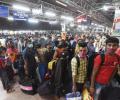
'When you compare Bihar's poverty from its earlier times, then there is a huge difference. Things have improved a lot. And migration has played an important role in reducing poverty.'
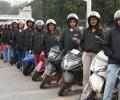
Rising inflation and stagnant wages are forcing a number of salaried professionals to venture into the bike taxi service as part-time riders.

In 2022-2023, 15.5 per cent of women were unemployed compared to 11.2 per cent in 2017-2018. For every one woman employed, 10 men got a job.

Growth in corporate profits needs to be commensurate with wages to boost the economy, Economic Survey 2024-25 said, noting that sharp disparities between the two pose risk to the economy by curbing demand. The document tabled in Parliament on Friday noted that while the labour share of GVA (gross value added) shows a slight uptick, the disproportionate rise in corporate profitsredominantly among large firmsaises concerns about income inequality.

India's unemployment rate fell to a six-year low of 3.2 per cent in the July-June 2022-23 period, down from 4.1 per cent in the same period the previous year, according to the latest annual Periodic Labour Force Survey (PLFS) report. The report, released by the National Statistical Office (NSO) on Monday, showed a decline in unemployment rates in both rural and urban areas during the 2022-23 period to 2.4 per cent and 5.4 per cent, respectively, from 3.2 per cent and 6.3 per cent in the 2021-22 period. The unemployment rate for rural women (1.8 per cent) was lower than that for rural men (2.7 per cent) in 2022-23; in urban areas, the rate was higher for females (7.5 per cent) compared to males (4.7 per cent).

Real GDP growth surprised on the upside in 2025, but weaker nominal growth, trade uncertainty, and soft demand signal a bumpier road ahead.
'When manufacturing or even services cannot generate the kind of employment they are looking for, they prefer to be unemployed rather than under-employed.'

The Indian government has expressed its disagreement with the IMF staff's 'baseline' assumption that the 50 per cent US tariffs on its goods exports 'would remain in place indefinitely', based on which the staff pegged the country's GDP growth at 6.6 per cent this year, and pared its 2026-27 projection by 20 basis points to 6.2 per cent.
